Hervey Bay sits on a coastal plain shaped by Quaternary sand deposits and buried dune systems, with groundwater levels often within 2 m of the surface. That combination creates a tricky profile: loose sands near the top, compressed by Holocene marine sediments, and deeper layers of reactive clay. We have carried out soil mechanics study in Hervey Bay on sites where the water table fluctuates with tidal cycles, meaning moisture content changes from week to week. For residential slabs and commercial pavements alike, understanding how these sands behave under load and how clays swell during wet season is the foundation of a reliable design. Before we start any field program, we review borehole logs from nearby projects and cross-check with geological maps from the Department of Resources. That saves time and ensures we target the critical strata from day one.
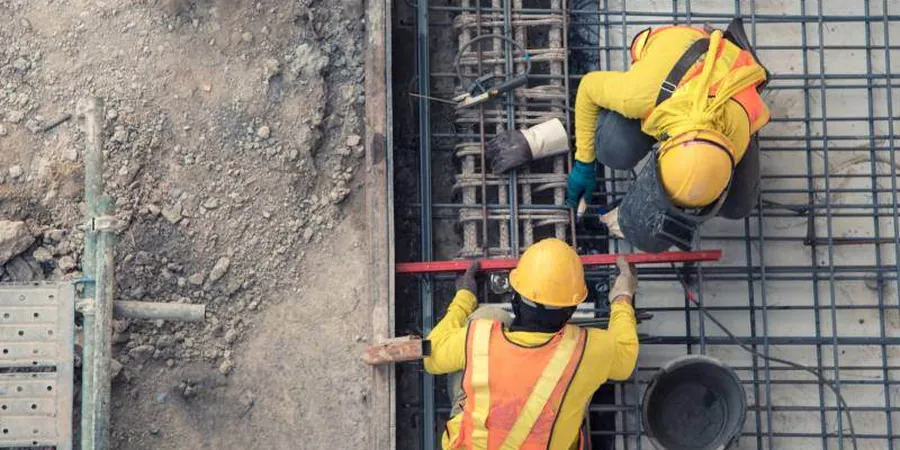
Understanding the tidal influence on groundwater in Hervey Bay is what separates a safe design from one that cracks after the first wet season.
Service characteristics in Hervey Bay
- Borehole drilling to depths of 6–12 m with undisturbed sampling in clay layers using thin-walled tubes.
- Standard Penetration Tests (SPT) in sand layers to estimate relative density and friction angle.
- Laboratory classification including moisture content, Atterberg limits, and particle size distribution per AS 1289.
Critical ground factors in Hervey Bay
Hervey Bay expanded rapidly from the 1990s, with new subdivisions pushing into former low-lying wetlands and dune swales. Many of those lots were filled with imported sand before construction, creating a compressible layer that continues to settle years later. A soil mechanics study in Hervey Bay needs to identify whether the fill is engineered or just dumped, because differential settlement in those areas has caused slab cracking and driveway misalignment. We have seen cases where a 4 m thick layer of loose sand over soft clay produced 50 mm of post-construction settlement. That is why we always run consolidation tests on the underlying clay before approving any raft foundation.
Our services
Our soil mechanics study in Hervey Bay covers the full scope of field and laboratory work, adapted to the coastal environment of the Fraser Coast region.
Borehole Drilling and Sampling
We drill boreholes up to 15 m depth using hydraulic rigs, with undisturbed sampling in cohesive layers and SPT in granular soils. All samples are logged on site and sealed for transport to our NATA-accredited lab.
Laboratory Classification
Moisture content, Atterberg limits, particle size distribution, and shrinkage index are determined per AS 1289. These results feed directly into soil classification and reactivity assessments for residential slabs.
Consolidation and Settlement Analysis
Oedometer tests on undisturbed clay specimens give us compression index and coefficient of consolidation, which we use to predict total and differential settlement under proposed loads.
Foundation Recommendations Report
We compile field data, lab results, and local experience into a geotechnical report that specifies allowable bearing capacity, footing depth, and any ground improvement needed before construction.
Frequently asked questions
What is a soil mechanics study and why is it needed in Hervey Bay?
A soil mechanics study evaluates the physical and mechanical properties of the ground to determine how it will behave under structural loads. In Hervey Bay, the coastal geology with loose sands, reactive clays, and a shallow fluctuating water table makes this essential for preventing differential settlement, slab cracking, and foundation failure in new buildings.
How much does a soil mechanics study cost in Hervey Bay?
For a standard residential project with three boreholes and a full laboratory suite, the cost ranges between AU$4,270 and AU$8,670. The variation depends on site access, depth required, and whether additional tests like consolidation or triaxial are needed. We provide a fixed quote after reviewing the site conditions.
How long does the study take from field work to final report?
Field drilling typically takes one to two days for a standard house lot. Laboratory testing follows for seven to ten days, depending on the number of consolidation stages. The final report is issued within two weeks of completing the field work, though we can expedite for tight construction timelines.
What standards govern soil mechanics studies in Queensland?
All our work follows AS 1726 for geotechnical site investigations and AS 1289 for laboratory test methods. We also reference AS 2870 for residential slabs and footings, which is especially relevant for Hervey Bay's reactive clay sites. Our lab holds NATA accreditation to ISO 17025.