Hervey Bay’s coastal geology presents a mix of Pleistocene sand deposits and quaternary alluvium, with groundwater levels typically sitting 2–4 m below the surface. These conditions demand careful retaining wall design to manage lateral pressures from both saturated backfill and potential scour during storm events. For projects near the Esplanade or Urangan, we routinely encounter loose sands that require drainage provisions and compaction control. Before finalising any wall geometry, we recommend integrating a stability analysis of the retained slope to verify global failure mechanisms aren't triggered by excavation. Our approach starts with subsurface profiling using test pits and SPT boreholes, ensuring the design soil parameters reflect actual field conditions rather than generic assumptions.
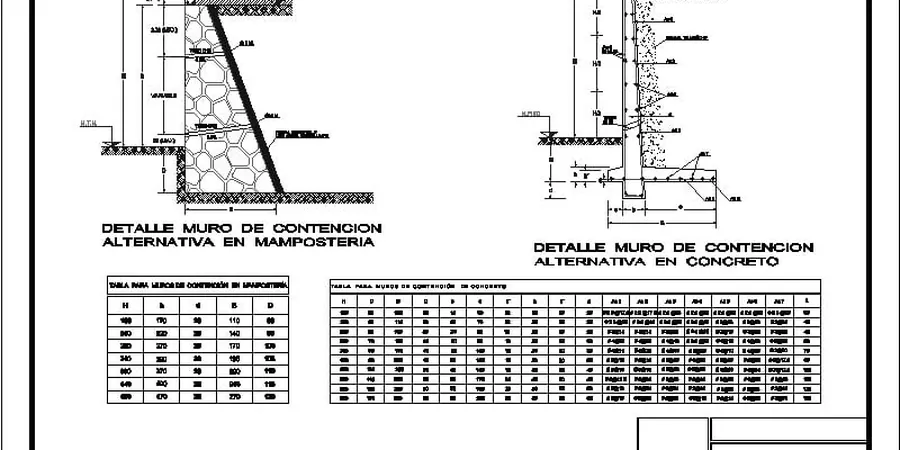
Coastal sand profiles in Hervey Bay require drainage design as critical as the wall structure itself; saturated backfill doubles lateral pressure.
Service characteristics in Hervey Bay
- Borehole drilling to 1.5× the wall height or until competent stratum is encountered
- Standard Penetration Testing (SPT) at 1.5 m intervals per AS 1726
- Laboratory classification including Atterberg limits and particle size distribution
Critical ground factors in Hervey Bay
In Hervey Bay, the most common issue we see in retaining wall design is underestimating the effect of perched water tables after heavy rainfall. The sandy upper horizons drain quickly but can develop a temporary phreatic surface above less permeable clay lenses, generating hydrostatic pressures far beyond the drained assumption. If the wall lacks a properly sized weep hole system or a continuous drainage blanket, the additional load can cause overturning or bearing failure. Another local risk is scour around the wall toe during cyclonic events, particularly on properties backing onto the Great Sandy Strait. We always include a scour depth check using local tide data and factor it into the embedment depth.
Our services
Beyond standard design, we provide two complementary services that address specific challenges in Hervey Bay's coastal environment:
Cantilever & Gravity Wall Design
For sites with good bearing capacity at shallow depth, we design reinforced concrete cantilever or mass gravity walls. Our analysis includes sliding, overturning, and bearing checks per AS 4678, plus a 0.5 m embedment minimum for scour protection. We specify concrete strength ≥ 32 MPa and steel reinforcement to AS 3600.
Reinforced Soil & Segmental Block Walls
Where space is limited or aesthetic requirements exist, we design mechanically stabilised earth (MSE) walls using geogrid reinforcement. These systems perform well in Hervey Bay's sands when drainage is correctly installed. We verify internal stability (pullout and rupture) and external stability (sliding and bearing) using limit equilibrium methods.
Frequently asked questions
What soil conditions most affect retaining wall design in Hervey Bay?
The dominant conditions are loose coastal sands with low cohesion and variable groundwater levels. In areas like Pialba or Torquay, we also encounter stiff to hard clays from the Maryborough Formation, which exhibit moderate shrink-swell potential. Each soil type requires different lateral pressure coefficients and drainage provisions.
How much does retaining wall design cost in Hervey Bay?
For a typical residential wall up to 2 m height, design fees range between AU$1.460 and AU$2.800. Larger commercial walls (4–6 m) with seismic and drainage complexity fall between AU$3.500 and AU$7.210. These include site investigation, lab testing, structural calculations, and a stamped engineering report.
Is a geotechnical investigation mandatory for retaining wall design?
Yes, under AS 4678 a site investigation is required unless the wall height is below 1 m and the soil is known to be consistent. For Hervey Bay, we recommend at least two boreholes or test pits per 20 m of wall length to capture variability in sand density and groundwater depth.
Can I build a retaining wall on the sand dunes near the beach?
Building on active dunes requires a specialised design that accounts for windblown sand accumulation, high groundwater, and potential wave overtopping during storms. We typically recommend a reinforced concrete wall with deep piles or a gravity section, plus a solid drainage system. Council approval may also require a coastal management assessment.