Hervey Bay's development along the Fraser Coast has seen steady growth since the 1970s, with residential estates and tourist infrastructure spreading across former dune systems and coastal plains. These sandy deposits, often loose and water-bearing, pose a challenge for any structure relying on bearing capacity alone. That is where grouting design enters the picture: injecting fluid stabilizers into the ground to improve density and reduce permeability. For projects near the Urangan marina or the newer Pialba suburbs, a tailored grouting design is essential to ensure that injected materials travel through the right voids without disturbing adjacent layers. A proper assessment begins with in-situ testing such as the permeability field test to map water flow paths before any injection work starts.
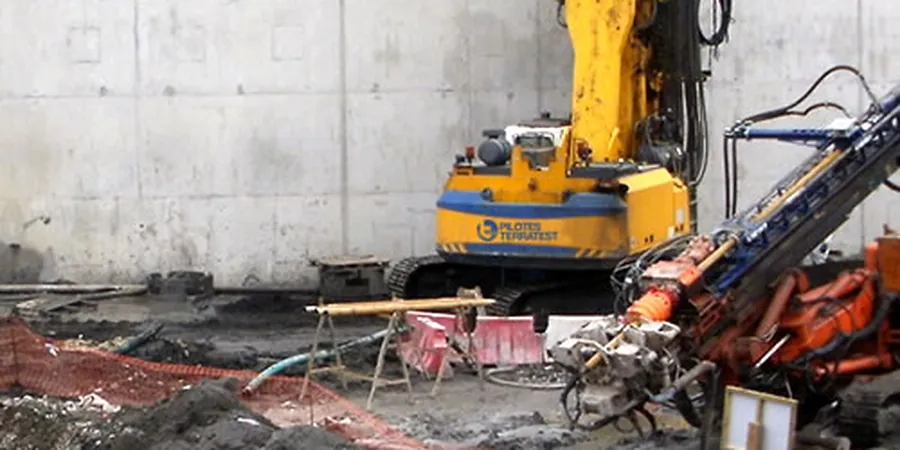
Grouting in coastal sands demands seasonal calibration: wet-season saturation can dilute cement grout before it sets, shifting the whole design window.
Service characteristics in Hervey Bay
Critical ground factors in Hervey Bay
In Hervey Bay, we often see designs that assume a uniform sand profile, but the reality is that paleochannels from ancient river courses cut through the coastal plain, creating preferential flow paths. If a grouting design ignores these features, the injected material may bypass the target zone entirely, leaving untreated pockets that later cause differential settlement. Another common oversight is neglecting the effect of tidal fluctuations on groundwater gradient; during high tide, grout can migrate toward lower pressure zones near the shore, wasting material and failing to densify the intended area. A thorough site investigation that includes probing for buried channels and monitoring tidal cycles for at least one full spring-neap cycle is non-negotiable before finalizing the grouting design.
Our services
Our grouting design service covers the full workflow from site characterization through injection parameter selection. We offer two core sub-services tailored to Hervey Bay's ground conditions.
Permeation Grouting Design for Sandy Profiles
We design low-pressure permeation grouting programs for loose to medium-dense sands typical of Hervey Bay's coastal strip. The design includes grout type selection (cementitious, microfine, or chemical), injection point spacing based on radius of influence calculations, and staged injection sequences to avoid hydrofracture. Deliverables include a grouting plan, pressure-volume curves, and quality control criteria.
Compaction Grouting Design for Void Filling
For sites with localized loose zones, sinkhole-prone areas, or backfilled excavations, we design compaction grouting programs that use stiff, low-mobility grout bulbs to densify the soil. The design accounts for the limited lateral confinement in sandy soils and includes displacement monitoring to prevent surface heave. Suitable for residential slabs and retaining wall backfills in the Pialba area.
Frequently asked questions
What is the typical cost range for a grouting design in Hervey Bay?
For a standard residential or small commercial project, the grouting design study including site investigation, parameter selection, and injection plan typically ranges between AU$1,920 and AU$6,180. Larger projects with multiple injection stages or deeper treatment zones fall on the higher end.
How does the high groundwater in Hervey Bay affect grouting design?
High groundwater, especially during the wet season or king tides, can cause cementitious grouts to wash out or dilute before they set. Our design accounts for this by specifying faster-setting chemical grouts or adjusting the water-to-cement ratio. We also recommend installing temporary dewatering wells if the water table lies within the treatment depth.
Can grouting design be applied to existing structures in Hervey Bay?
Yes, grouting is often used for underpinning existing slab-on-ground houses in the Scarness and Point Vernon areas where loose sand layers lead to settlement. The design must consider restricted access, the risk of heaving the existing slab, and the need for low-pressure injection to avoid disturbing the foundation. Microfine cement or polyurethane resin grouts are common choices for retrofits.
What site data is needed before a grouting design can be developed?
We require borehole logs showing soil stratification and groundwater levels, laboratory test results for grain size distribution and permeability, and ideally a trial injection at one location to confirm the radius of influence. For Hervey Bay sites, we also ask for tidal records and any historical fill maps to identify buried channels or debris that could alter grout flow.