In Hervey Bay, the contrast between the sandy coastal fringe at Torquay and the denser alluvial deposits near Pialba creates two distinct foundation challenges. Along the Esplanade, loose sands dominate the upper 8 metres, requiring piles to develop most of their capacity through skin friction. Inland, stiff clays and compacted sands offer higher end bearing resistance, often at depths beyond 15 metres. Understanding this split is essential for efficient pile design in Hervey Bay. A detailed pile skin friction vs. end bearing analysis determines which mechanism governs capacity, allowing engineers to optimise pile length and diameter. Before committing to a design, it is wise to cross-reference these results with a study of bearing capacity to validate the ultimate geotechnical resistance.
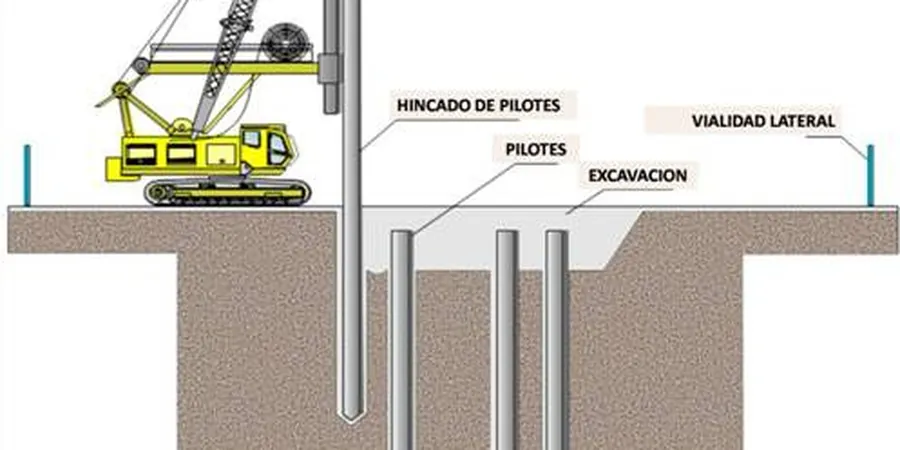
In Hervey Bay, the transition between coastal sand and underlying clay can mislead pile capacity estimates — site-specific skin friction parameters are essential.
Service characteristics in Hervey Bay
Demonstration video
Critical ground factors in Hervey Bay
In Hervey Bay, we often find that the transition zone between the coastal sand sheet and the underlying clay layer creates a misleading bearing stratum. A pile driven 1 metre into what appears to be stiff clay may actually terminate just above a soft lens, shifting the load path entirely to skin friction. If the shaft adhesion is overestimated in this zone, the pile can plunge under working loads. That is why a rigorous pile skin friction vs. end bearing analysis is non-negotiable for any deep foundation project in Hervey Bay. The local geology demands site-specific parameters, not generic assumptions from regional tables.
Our services
The lab offers three complementary services that support the pile skin friction vs. end bearing analysis for Hervey Bay projects.
CPT-09 Cone Penetration Testing
Continuous profiling of cone resistance and sleeve friction for direct skin friction and end bearing estimates. Delivered with pore pressure dissipation data for clay layer evaluation.
Advanced Laboratory Triaxial Suite
Consolidated-drained and undrained triaxial tests on undisturbed samples to calibrate the Alpha and Beta coefficients used in shaft friction calculations.
Pile Load Test Monitoring
Static and dynamic load testing with strain gauges to separate skin friction from end bearing under working and ultimate loads. Results are compared directly against the analytical model.
Frequently asked questions
What is the difference between skin friction and end bearing in pile design?
Skin friction is the shear resistance mobilised along the pile shaft from the surrounding soil. End bearing is the compressive resistance at the pile tip. In Hervey Bay, most piles in the coastal sand sheets rely heavily on skin friction, while inland sites with stiff clays can develop significant end bearing.
How is the pile skin friction vs. end bearing analysis performed in Hervey Bay?
CPT data provides continuous profiles of cone resistance and sleeve friction. SPT N-values from boreholes are correlated with published skin friction charts for Queensland soils. Laboratory triaxial tests on undisturbed samples then calibrate the design parameters. The final load distribution is calculated using methods from AS 2159-2009.
What typical skin friction values are measured in Hervey Bay sands?
In the loose to medium dense sands along the Hervey Bay coastline, unit shaft friction typically ranges between 15 and 35 kPa. For the deeper compacted layers encountered inland, values can reach 50 to 70 kPa. These figures are validated against local case histories from the region.
When should a project consider a combined skin friction and end bearing design?
A combined design is common when the founding stratum is a medium dense sand overlying stiff clay. In Hervey Bay, this occurs frequently in the Torquay to Scarness corridor. The pile mobilises skin friction in the upper sand and end bearing in the clay. The analysis must verify that both mechanisms can be activated simultaneously without exceeding allowable settlement.