Many construction teams assume Hervey Bay soils are uniformly stiff because the city sits on a coastal plain. That assumption can lead to under-designed foundations in areas like Urangan or Point Vernon, where loose sands and soft clays dominate the upper profile. Without a proper site response analysis, the actual amplification of earthquake waves goes unaccounted. We have seen several projects where ignoring this step meant the structure's natural period matched the site's resonant frequency — a classic design flaw. Our team runs the full seismic site classification (Vs30, NEHRP class) and computes ground response using equivalent-linear and nonlinear methods. We also integrate liquefaction assessment for the saturated sands near the coast, as those zones amplify cyclic loading most.
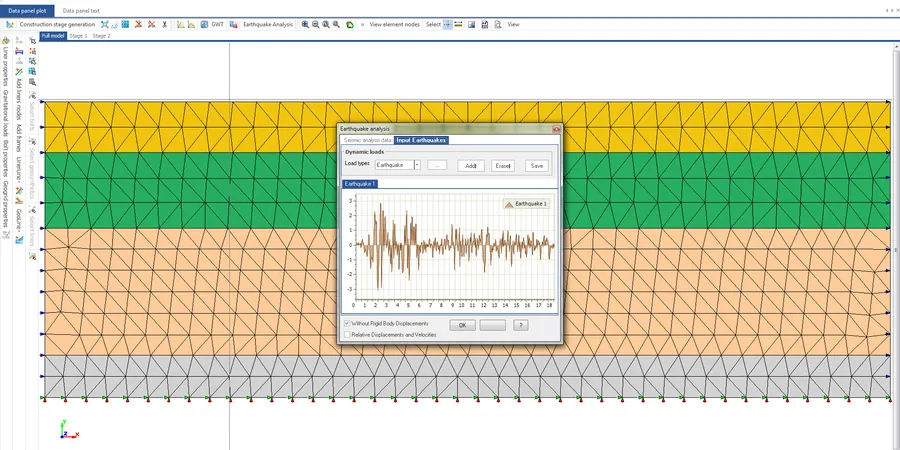
A site with Vs30 below 180 m/s can amplify peak ground acceleration by a factor of 2.5 compared to a rock site, according to NEHRP amplification factors.
Service characteristics in Hervey Bay
- Shear-wave velocity profiling via MASW and ReMi (AS 1289)
- 1D and 2D ground response using DEEPSOIL and PLAXIS
- Site-specific design spectra per AS 1170.4-2007
Critical ground factors in Hervey Bay
In Hervey Bay, we frequently observe that shallow groundwater — sometimes less than 2 m deep in the Pialba area — turns a moderate earthquake into a liquefaction event. The loose sands there have SPT N-values around 5–10 blows/ft, right in the critical range. Missing the site response analysis means you also miss the cyclic stress ratio check. We have seen retaining walls tilt and pavements crack after a minor tremor because the design never accounted for ground motion amplification. Our engineers map the liquefaction potential using the NCEER method (Youd & Idriss, 2001) and apply ground response results to refine the cyclic resistance ratio.
Our services
We offer two core services to match the specific seismic profile of Hervey Bay sites.
Seismic Site Classification & Vs30 Profiling
Surface-wave methods (MASW, ReMi) and downhole seismic to determine shear-wave velocity to 30 m depth. Results include NEHRP site class, AS 1170.4 soil type, and a velocity profile for input into ground response models.
1D/2D Ground Response Analysis
Equivalent-linear and nonlinear analyses using DEEPSOIL and PLAXIS. Outputs include acceleration time histories, response spectra (5% damping), and amplification factors. Suitable for performance-based design of hospitals, schools, and multi-story buildings in Hervey Bay.
Frequently asked questions
What is site response analysis and why is it needed in Hervey Bay?
It is a geophysical study that calculates how local soil layers modify earthquake waves as they travel from bedrock to the surface. In Hervey Bay, the coastal sands and soft clays can amplify ground motion by a factor of 2 or more compared to a rock site. Without this analysis, structures may be designed for shaking levels that are too low, increasing collapse risk.
How much does a site response analysis cost in Hervey Bay?
The typical cost ranges from AU$1,950 to AU$7,010 depending on the number of test locations, depth of profiling, and whether you need 1D or 2D modeling. A basic single-borehole Vs30 profile with a 1D response analysis is at the lower end; a full 2D model for a large subdivision sits at the upper end.
What are the most common soil types found in Hervey Bay and how do they affect ground motion?
The dominant soils are Holocene sands (loose to medium dense) and estuarine clays, often with high water content. These fall into NEHRP class D or E, meaning they have low shear-wave velocity (150–250 m/s). Such soils amplify long-period waves, making mid-rise buildings (4–8 stories) particularly vulnerable because their natural period can match the site period.
Which standard governs seismic site classification in Australia?
AS 1170.4-2007 is the primary standard. It defines site classes A to E based on Vs30, SPT N-value, or undrained shear strength. For Hervey Bay, most sites fall into class D (stiff soil) or E (soft soil). We also follow NEHRP recommendations and AS 1289 for seismic testing methods.