Hervey Bay sits on a coastal plain with sandy soils and a shallow water table, often within 2–3 metres of the surface. This setting demands careful geotechnical excavation monitoring to prevent wall collapse, water inflow, or settlement of adjacent structures. We combine in-situ instrumentation with regular surveying to track ground movement and pore pressure changes throughout your excavation. Before any major cut, it is wise to pair this monitoring with a study of bearing capacity to confirm the soil can support temporary shoring loads. Our team has worked on residential basements, commercial pits, and infrastructure trenches across the Fraser Coast region, so we understand the local sand and clay sequences intimately.
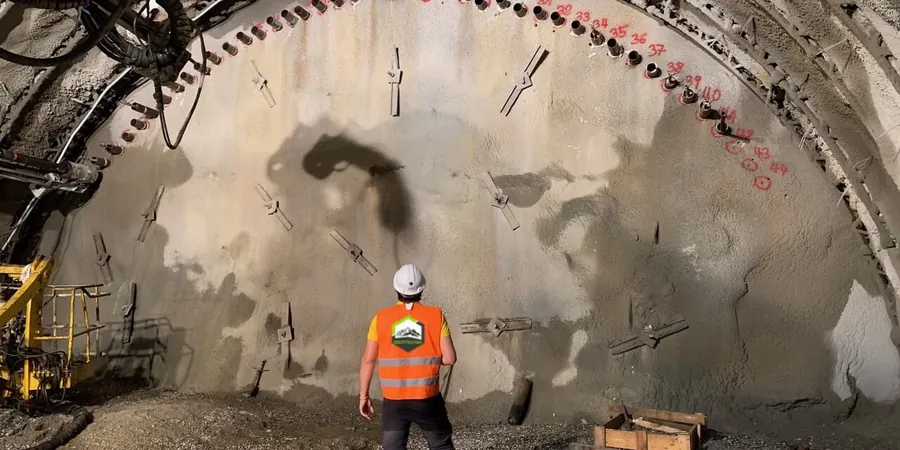
Real-time data from inclinometers and piezometers lets us spot developing instability days before it becomes visible on the surface.
Service characteristics in Hervey Bay
Critical ground factors in Hervey Bay
In Hervey Bay, many contractors discover only after the first metre that the sand is looser than the boreholes suggested, or that the water table is higher than the dry-season test indicated. That is when reactive excavation monitoring becomes critical. Without real-time data, a 50 mm wall movement can escalate into a full collapse within hours — especially after a rain event. We have seen it happen on construction sites near the Esplanade, where the sandy fill behaves almost like running sand when saturated. Our monitoring catches these changes early, giving you time to adjust shoring, lower the water table, or redesign the excavation sequence before the problem becomes a safety issue.
Our services
We deliver two core monitoring packages tailored to excavation scale and risk level:
Real-Time Instrumentation & Alarm System
Permanent installation of inclinometers, piezometers, and strain gauges with automated data logging. Alerts are sent via SMS or email when readings exceed predefined trigger levels. Ideal for deep excavations (over 3 m) or sites adjacent to existing buildings.
Periodic Visual & Survey Monitoring
Weekly or twice-weekly walkover inspections combined with manual survey of settlement points and crack gauges. Suitable for shallow trenches, service pits, or low-risk cuts where continuous instrumentation is not justified. All data compiled into a concise report for the engineer.
Frequently asked questions
What is the difference between excavation monitoring and general site inspection?
Excavation monitoring uses calibrated instruments — inclinometers, piezometers, and survey targets — to measure actual ground and wall behaviour. A general site inspection relies on visual observation alone. Monitoring provides numerical data that can be compared against design assumptions, so you know whether the excavation is performing as expected or if corrective action is needed.
How often should monitoring be carried out during an excavation in Hervey Bay?
Frequency depends on the excavation depth, soil type, and proximity to structures. For a typical 3–4 m deep pit in sandy soil, we recommend daily readings during the active digging phase and twice-weekly readings once the base is reached and propping is installed. After heavy rainfall, we increase frequency to catch any rapid pore pressure rise.
What are the typical costs for excavation monitoring in the Fraser Coast region?
Costs for a standard monitoring programme on a 5–6 m deep excavation in Hervey Bay typically range between AU$1.340 and AU$3.980. This includes instrument installation, data collection over a 4–6 week period, and a final interpretation report. The actual price depends on the number of instruments, site access, and duration of monitoring.
Can monitoring be done after excavation has already started?
Yes, but it is not ideal. We can install inclinometer casings and piezometers in boreholes drilled from the current ground level or from a working platform. However, baseline readings are less reliable because some movement may have already occurred. The earlier we install instruments, the more accurate the dataset for back-analysis and forward prediction.